

PAINTING
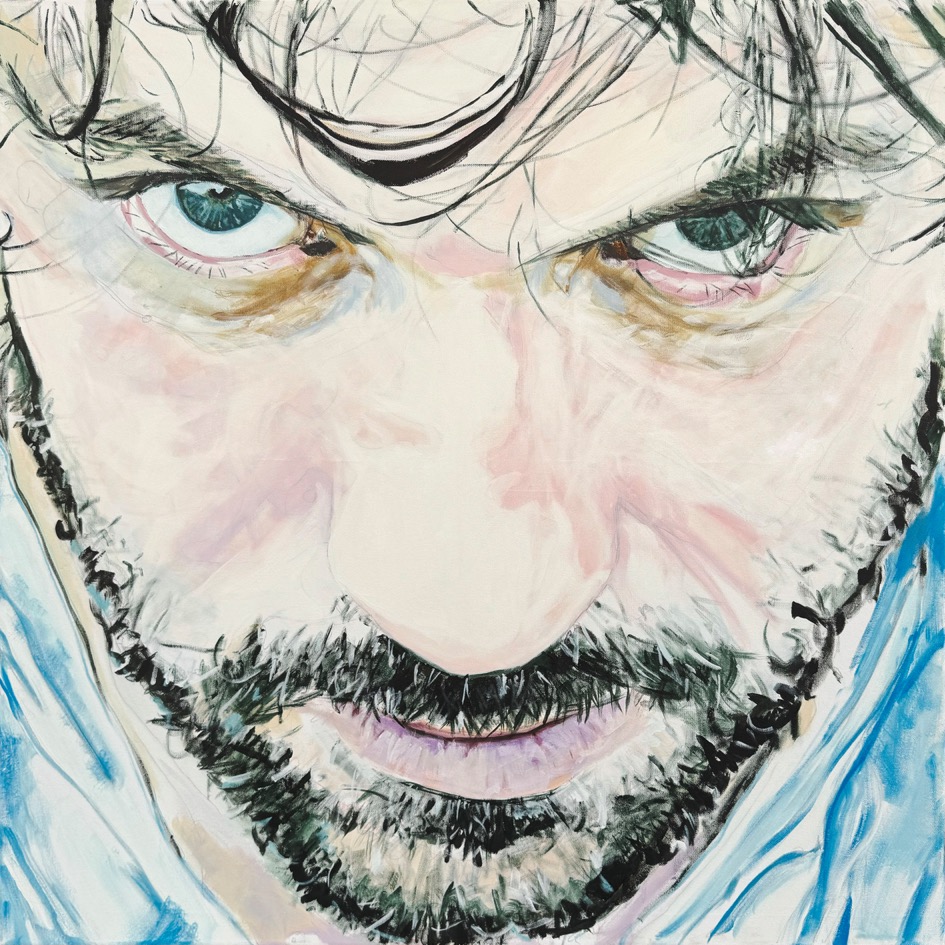
Daniel
(as Patroclus)
Daniel
2015
Acrylic and
Acrylic and pencil
pencil
on canvas,
100 × 100 cm
Daniel
(as Patroclus)
Daniel
2015
Acrylic and
Acrylic and pencil
pencil
on canvas,
100 × 100 cm
Many people can paint like me. My pictures show how it could be done.
Every person can be painted. The pictures do not belong to just a few people.
The pictures show people that they are good. The pictures also show people that they can be even better.
Through traces of the painterly approach, my works reveal how they are made and thus forgo any attempt to appear elitist. The imitation of well-known imagery and genres makes them easier to approach. Areas left unpainted, partly still visible preliminary drawings, and the choice of materials scratch at the sublimity of the image.
The works place the painted subjects in a recoverable deficit relative to a better self. The image glorifies one's own life and yet holds out the prospect of a better one. In this tension, the works aim at both the acceptance and the actualisation of one's own person.
Through artefacts of the painting process, my works reveal their fabrication and thus forgo the elitist veneer of artistic works. The emulation and imitation of well-known subjects and pictorial genres facilitates access. The unpretentious choice of materials, partly still visible preliminary drawings, and areas left unpainted undermine the sublimity of the image.
The works place the portrayed in a recoverable deficit relative to an idealised self. The image functions as a distortion. It glorifies one's own life while simultaneously holding out the prospect of its possible enhancement. In this tension, the works aim at self-acceptance and self-actualisation.
These artworks are about men. These men were important to me. Sometimes I wanted to be like them. Sometimes I wanted to be different from them.
The word "Konkurrenz" comes from an old language. It means: walking together. Or: running together.
The men in the pictures are older now. They look different from before. They have also experienced more than before.
When I look at the pictures, I realise: I always live in connection with other people.
The word RIVUS also comes from an old language. It means: river. Two other words come from this word: "River" means river in English. "Rival" means opponent. A rival used to be someone who lived on the same river. So: The men are my neighbours on the river.
In the work cycle RIVUS, I engage with the men who were both rivals and role models to me. "Konkurrenz" (competition), from "concurrere", originally means "running/walking together." In the competition for masculinity, the same people appeared to me at times as dazzling ideals and at other times as objects of distinction.
In compendia of pathos formulae, the depicted find both affirmation, yet also always experience the difference that has arisen from a former self. They have both aged physically and grown richer in experience.
"River" and "rival" both derive from RIVUS:
My neighbours on the river.
In the work cycle RIVUS, I engage with the men who were both rivals and ideals to me. "Konkurrenz" (competition), from "concurrere", originally means "running/walking together." In the competition of fulfilling the shifting expectations of masculinity, the same people appeared to me at times as dazzling ideals and at other times as objects of distinction.
In compendia of pathos formulae, the depicted find both affirmation, yet also always experience an inevitable difference from a former self. They are often confronted with a physically superior, yet less experienced state. I myself recognise that I have grown through my identification with others.
"River" and "rival" both derive from RIVUS:
My neighbours on the river.
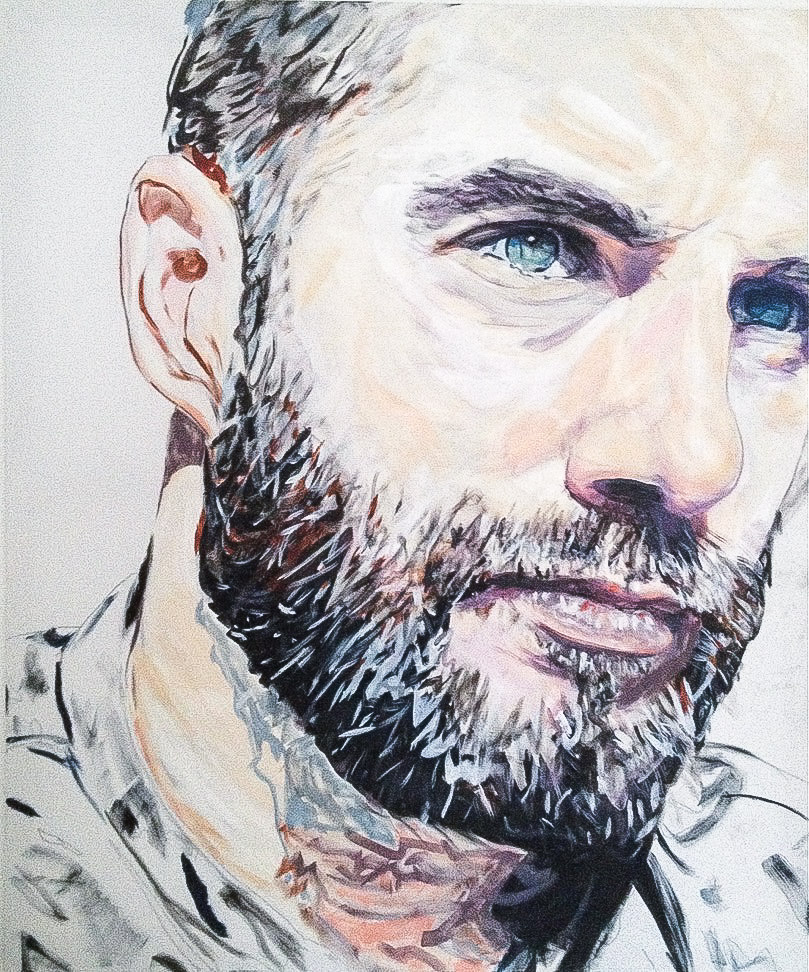
Ben
2015
Acrylic, pencil
and coloured pencil
on canvas,
Acrylic, pencil and
coloured pencil on canvas,
120 × 100 cm
I have made artworks. The artworks are called together: MYTHUS.
In these artworks I paint people as pictures. Such pictures are called: portraits.
I look at many things. For example: How is the picture structured? What colours do I use? What does the picture show?
I also ask myself: What role did portraits have in the past? And what role do they have today?
In the past, important people were painted. For example, kings and queens. Or famous stories were painted.
There were also old stories about gods and heroes. These stories are called: myths. The myths came mainly from Europe and from West Asia.
I use these old ideas for my art. But I do not paint kings or gods. I paint people from my life.
With this, I want to show two things: I want to give these people honour. And I want to give them courage. My message is:
You are good, just as you are becoming.
In the cycle MYTHUS, I am particularly concerned with compositional elements such as the structure of the image, style, or colour symbolism. I inquire into historically significant imagery and the role of the portrait in past and present.
In doing so, I draw on models from art history: the ruler portraits and history paintings of the pre-modern era, but also myths from European and West Asian antiquity and pre-antiquity. With these references, I want to honour the people in my surroundings and encourage them at the same time:
You are good, just as you are becoming.
In the cycle MYTHUS, I pursue not only formal and thematic art-specific categories such as composition, style and colouring, iconography and subject matter, but also the function of the portrait in past and in my present culture.
The recursion to art-historical models draws, among other things, on the representational art of the pre-modern era, with its ruler portraits and history paintings, but also borrows from the myths of predominantly European and West Asian antiquity and pre-antiquity. I both honour the people in my surroundings with these references and hope to encourage them at the same time: You are good, just as you are becoming.
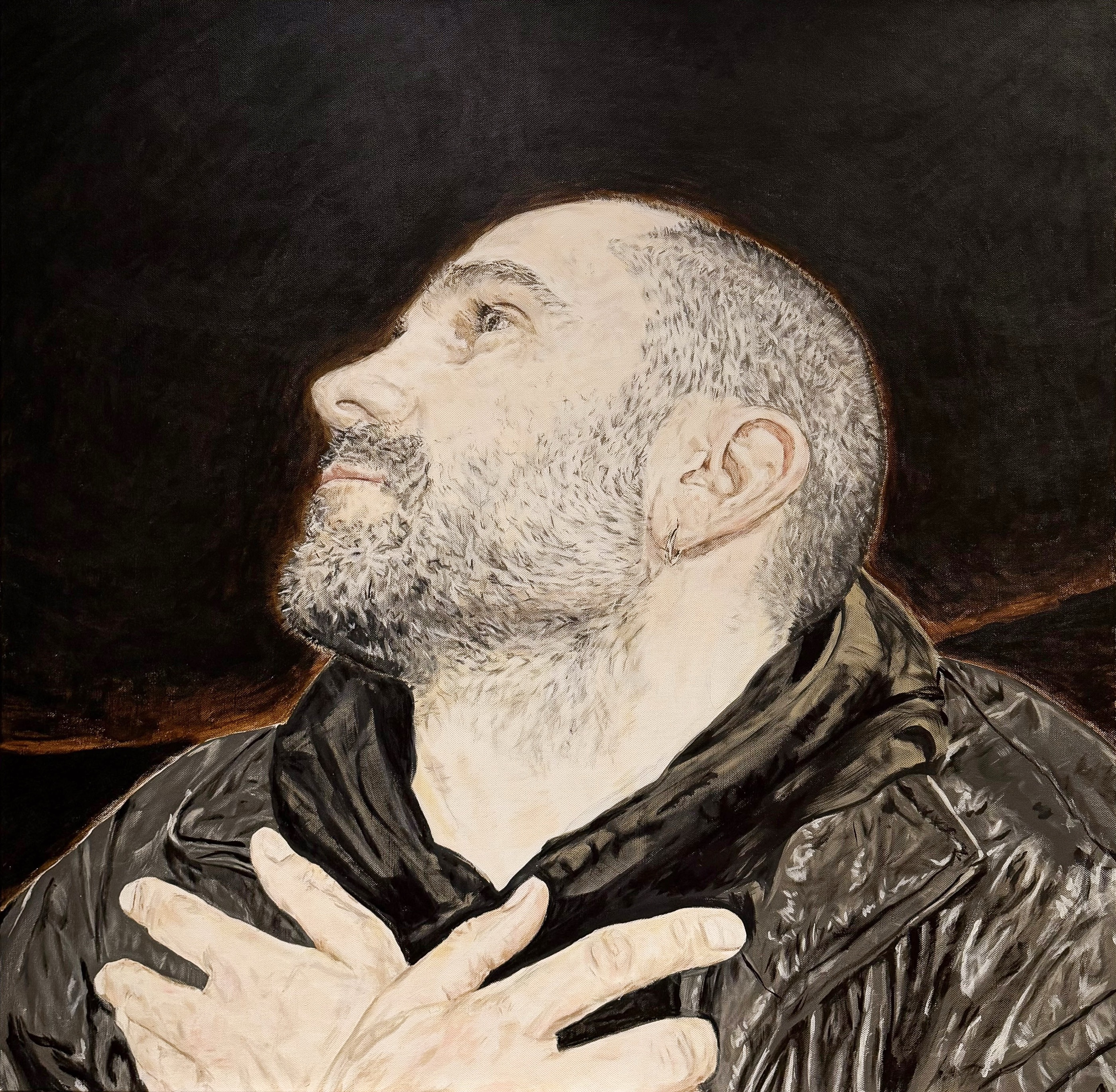
Alex
2025
Acrylic, pencil
and coloured pencil
on canvas,
and coloured
pencil on
canvas,
100 × 100 cm
Most people recognise faces.
They can see if someone is happy or sad.
In my paintings I only paint the face.
I do not paint clothing.
I do not paint hair.
I do not paint make-up.
This way you can feel the paintings in your own body.
While I paint, I ask myself:
Can the way I paint also fit the face?
For example:
Where I place the face in the picture.
How I move the brush.
Which colours I use.
Most people recognise a face and can read what it expresses. In these paintings I largely leave out details that say something about the time or culture of the person shown, such as clothing, hairstyle, or make-up. In this way, the paintings are meant to address the viewers physically. The question that occupies me is whether the composition, the painterly gesture, the brushstroke, and the colour can also correspond to the facial expression.
Most people recognise faces and read their expressions. Largely freed from pictorial content that documents period or culture – such as clothing, hairstyle, or make-up – the paintings offer a bodily, indeed a corporeal encounter. In them I pursue the question of how far the respective facial expression can also be matched in composition, gesture, brushwork, and colour.
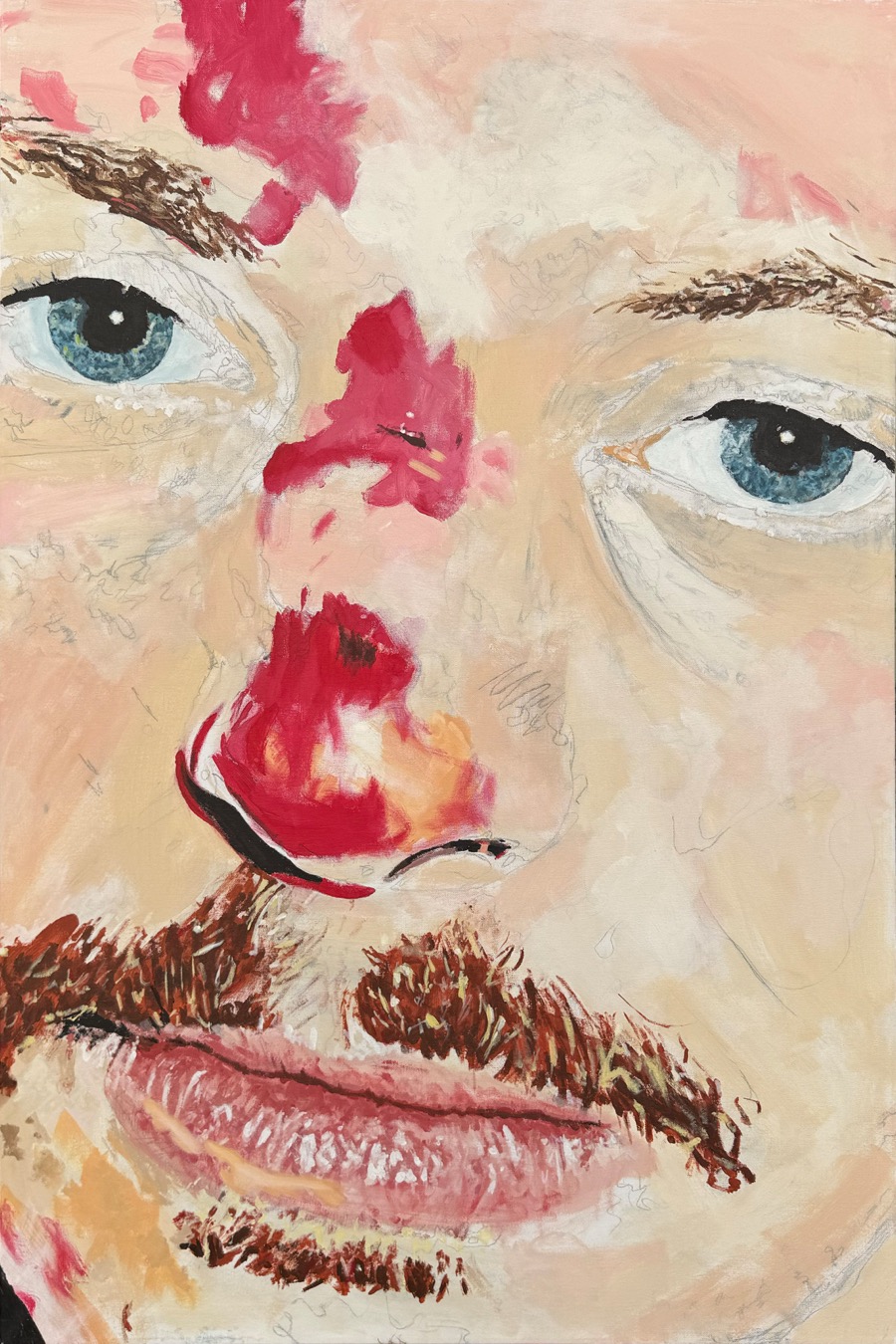
Michael (at the Cross)
Michael
(at the Cross)
2015
Acrylic and
Acrylic and pencil
pencil
on canvas,
120 × 80 cm
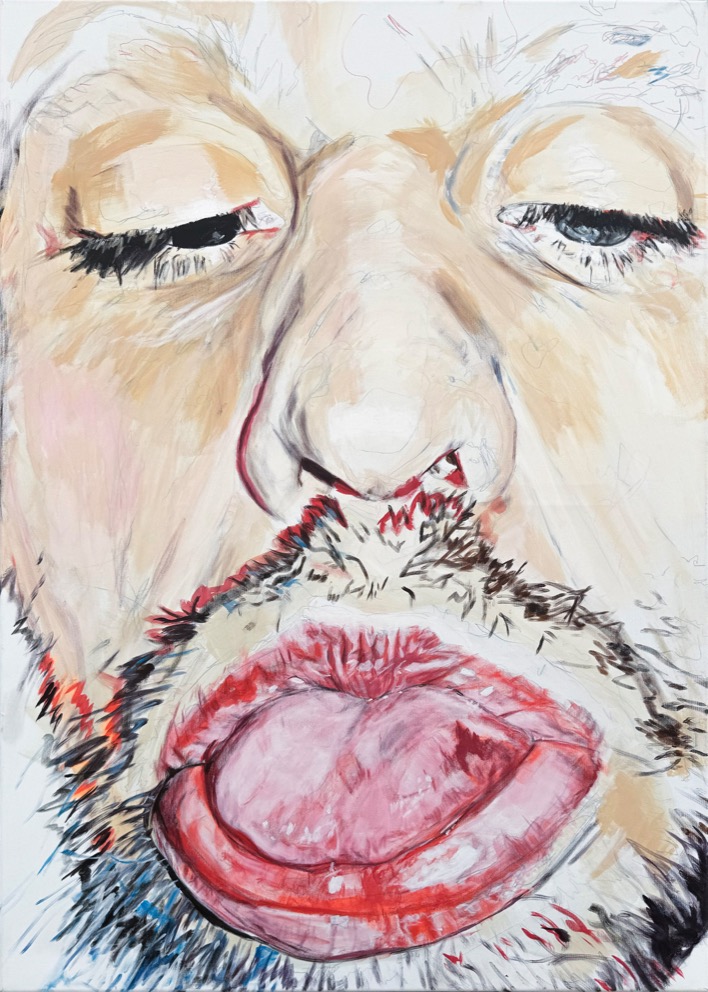
Marcus
2017
Acrylic, graphite and wood pencil
on canvas, 100 × 140 cm